My Chessnut Review 2026: What I Like, What I’d Change, and Which Board I’d Choose
Updated 2026 — After looking closely at the Chessnut ecosystem, I think these smart chess boards make the most sense for players who genuinely enjoy the physical feel of chess but still want the convenience of online play, game recording, engine analysis, and digital training. I would not recommend Chessnut to everyone, though. The real question is whether you will use those smart features often enough to justify the price.
I’ve always thought the best chess experience happens away from the screen.
There is something different about picking up a real piece, considering the position, and physically making the move. At the same time, I understand why so many players spend most of their time on digital chess platforms. Online games are convenient, opponents are always available, and analysis is only a click away.
That is what makes Chessnut interesting to me.
Instead of forcing you to choose between physical chess and digital chess, the idea is to combine the two.
After looking at models such as Chessnut Air, Move, Pro, Evo, and Go, I think the brand has created one of the more compelling options for players who want a modern chess setup without giving up the tactile experience of a real board.
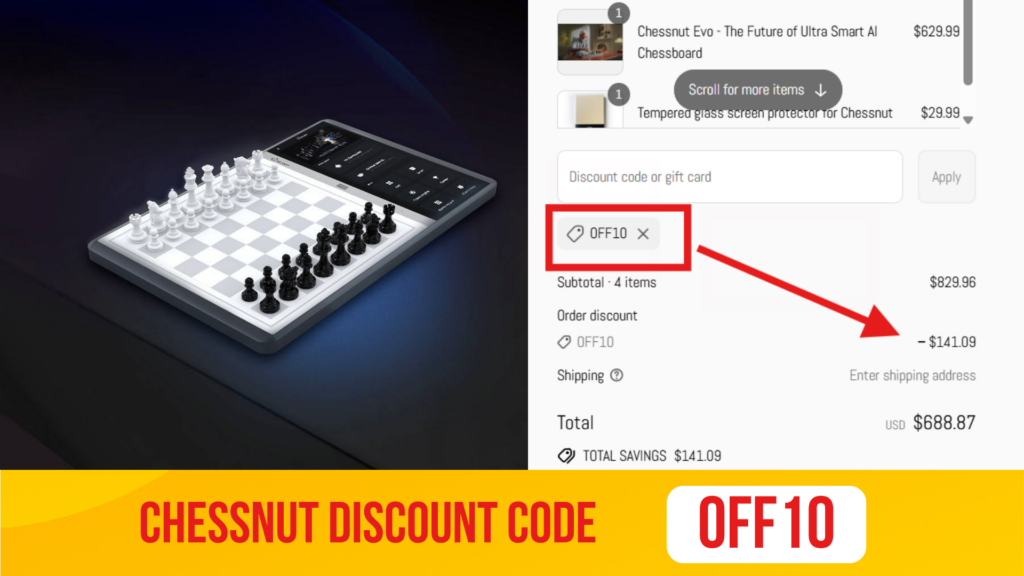
And if you eventually decide to buy one, there is also a small bonus worth checking: Chessnut discount code OFF10 may give you 17% OFF at checkout.
My First Impression of Chessnut
Chessnut is a smart chess board designed to detect physical moves and connect them with digital chess experiences.
What I like about the concept is that the technology stays relatively invisible during normal play.
Ideally, I don't want to think about sensors.
I don't want to constantly check whether the board registered my move.
I simply want to move the knight, look at the position, and continue playing.
That is the standard I would use when evaluating any electronic chess board.
The hardware can have impressive specifications, but if the physical experience feels unnatural, I don't think the technology is doing its job.
For me, Chessnut is most appealing when it behaves like a normal chess board first and a piece of technology second.
Why I Think Chessnut Is Different
The main advantage of Chessnut is that it preserves physical chess while adding digital features such as online play, game recording, and training.
This is the part I find easiest to appreciate.
I have no problem playing chess on a computer when I want convenience.
But there are times when moving pieces on a screen simply does not feel the same.
A physical board gives you a better sense of space.
You can see the entire position naturally.
You can pick up a piece and move it without thinking about a mouse cursor.
Chessnut takes that familiar experience and adds digital functionality around it.
For a player who spends a lot of time online but still prefers real pieces, that is a genuinely useful combination.
Chessnut Air: The Model I'd Consider for Portability
Chessnut Air is the model I would look at first if portability is more important to me than having the largest possible playing surface.
This is where I think the Air makes sense.
I don't necessarily want a smart chess board that permanently occupies a large desk.
If I travel frequently or move between rooms, portability becomes important.
A compact board makes it easier to take the hobby with me.
The compromise, of course, is that a portable board won't necessarily feel as substantial as a larger premium board.
Personally, I would accept that compromise if I knew I was going to travel with it regularly.
If the board is going to sit permanently in a home chess room, I would probably look at a larger model instead.
Chessnut Move: A More Flexible Everyday Option
Chessnut Move appeals to me as an everyday smart-board option for players who want physical chess combined with digital connectivity.
What I find attractive about this type of product is flexibility.
I don't want my chess board to be useful for only one thing.
If I can use it for physical games, online games, training, and recording, it becomes much easier to justify the additional cost.
That versatility is important because my chess habits can change.
One day I might want to play a friend.
Another day I might want to practice against an engine.
Another day I might simply want to replay one of my old games.
A smart board becomes much more interesting when it can accommodate all of those situations.
Chessnut Pro: The One I'd Look at for a Home Setup
Chessnut Pro makes more sense to me if the board will stay at home and I care more about playing comfort and a substantial physical experience than maximum portability.
This is an important distinction.
Portable products are convenient.
But when I sit down for a serious chess session, I want the board to feel stable and comfortable.
I don't necessarily need the smallest possible footprint.
A larger board can make the pieces easier to see and the position more natural to study.
For someone who plays every day, those details become more important.
I would therefore consider the Pro more seriously for a dedicated home setup than for travel.
Chessnut Evo: For Players Who Want More Than a Smart Board
Chessnut Evo is the type of Chessnut product I would consider if I wanted a more complete digital chess experience integrated into the physical board.
This is where the distinction between a smart board and a traditional electronic board becomes interesting.
I don't just want sensors underneath the squares.
I want the technology to add something meaningful to the experience.
Training, analysis, digital interaction, and online functionality can all make a difference.
For a serious chess enthusiast, the board can potentially become part of the entire chess workflow rather than simply an accessory.
The downside is obvious: the more technology involved, the more important software quality and usability become.
That is something I would investigate carefully before buying.
Chessnut Go: My Pick for Players Who Travel
Chessnut Go is worth considering if portability is one of my highest priorities and I want to maintain a physical chess routine while traveling.
For me, this is one of the more interesting reasons to own a smart chess board.
Travel often makes hobbies inconvenient.
A traditional tournament-sized chess set isn't necessarily something I want to carry everywhere.
But if a portable smart board can give me a physical playing experience while also connecting to digital chess, the proposition becomes much stronger.
I would still compare dimensions, weight, battery requirements, and supported features before making the decision.
Portability sounds great on paper, but the board needs to be genuinely convenient to carry.
What I Notice About the Physical Playing Experience
A good electronic chess board should still feel natural when you forget that it contains electronics.
This is probably my most important personal criterion.
I don't want the board to feel like a gadget.
I want to enjoy playing chess.
The pieces should feel comfortable to handle.
The squares should be easy to see.
The board should feel stable.
And moving pieces should feel natural.
That might sound obvious, but it is easy for smart products to become overly focused on technology.
Chessnut works best when the technology stays in the background.
The board should not constantly remind me that I'm using an electronic product.
How Important Is Move Recognition?
Accurate move recognition is essential because the entire smart-board experience depends on correctly translating physical moves into digital positions.
This is something I would test carefully.
Imagine playing a serious game and making a move.
If the board does not register it correctly, the entire digital position can become confusing.
That destroys the main advantage of the product.
The ideal experience is almost boring.
I move a piece.
The system recognizes it.
The digital position updates.
I continue.
When that process works reliably, the technology disappears into the background.
That is exactly what I want from a smart chess board.
Why I Like Digital Game Recording
Automatic game recording is one of the Chessnut features I find most useful because it allows physical games to become digital records without manually writing every move.
This sounds like a convenience feature.
For serious players, I think it can be much more than that.
If I play an interesting game, I want to be able to revisit it later.
If I lose a game badly, I want to understand why.
If I discover an opening idea, I want to save it.
Automatic recording makes those habits much easier.
Instead of finishing a game and forgetting most of it, I can potentially build a digital archive of my games.
Over months and years, that could become extremely valuable.
Chessnut for Online Chess
Chessnut's biggest appeal for online players is the possibility of making digital chess feel more like a physical game.
This is where I think the product becomes genuinely different from simply owning a chess app.
Online chess is incredibly convenient.
But clicking pieces with a mouse doesn't give me the same physical connection to the game.
With a smart board, the intention is different.
I physically move the piece.
The system communicates the move digitally.
The opponent can still be online.
The game can still be recorded.
The experience sits somewhere between over-the-board and online chess.
If that sounds appealing to you, I think Chessnut is much easier to justify.
Chessnut for Training
A smart chess board can make chess training more engaging by combining physical pieces with engines, puzzles, game analysis, and digital lessons.
Personally, I think this could be one of the biggest long-term advantages.
There is a difference between looking at a tactical position on a screen and physically setting it up on a board.
The latter forces you to interact with the position differently.
You can replay an opening.
Set up a famous game.
Study a tactical motif.
Practice against an engine.
Review your mistakes.
For an improving player, having a physical board connected to digital training can make practice feel less repetitive.
Is Chessnut Better Than a Normal Chess Board?
I wouldn't say Chessnut is better than a traditional chess board; I would say it is better suited to a different type of chess player.
If you want simplicity, a traditional board wins.
There is no charging.
No software.
No connectivity.
No firmware.
Nothing to troubleshoot.
A beautiful wooden board can also be far more aesthetically pleasing.
Chessnut offers something else.
It gives me physical pieces while adding digital functionality.
So the real question isn't “Which board is better?”
The better question is:
Do I want technology to become part of my chess experience?
If the answer is yes, Chessnut starts making a lot more sense.
Chessnut vs Playing on a Computer
Chessnut is most compelling for players who enjoy digital chess but dislike losing the physical interaction of moving real pieces.
A computer is obviously more practical for many situations.
It's faster.
It's cheaper if you already own one.
Analysis tools are powerful.
Online platforms are easy to access.
But I don't think convenience is the only thing that matters in chess.
For some players, the physical board is part of the enjoyment.
That's exactly the gap Chessnut is trying to fill.
If I already spend hours playing online but find myself missing the physical experience, a smart board is a logical solution.
What I Like Most About Chessnut
The strongest thing about Chessnut is the balance between traditional chess and modern technology.
I like that the board doesn't require me to abandon physical chess in order to use digital features.
I also like the variety of models.
A traveler has different requirements from someone building a permanent chess setup.
A casual enthusiast has different requirements from a tournament player.
A beginner has different requirements from someone who studies chess every day.
Having Air, Move, Pro, Evo, Go, and other options makes the ecosystem more flexible.
The important part is choosing based on actual usage rather than simply buying the most expensive model.
What I'd Think About Before Buying
The biggest question I would ask myself before buying Chessnut is whether I will actually use its smart features frequently enough to justify the price.
This is where I would be honest.
If I only play chess occasionally, I don't need an electronic board.
A normal chess set will do the job.
If I play primarily online and have no interest in physical pieces, a computer is probably more convenient.
Chessnut becomes compelling somewhere in the middle.
I want physical chess.
But I also want digital convenience.
I want to record games.
I want online opponents.
I want training tools.
I want technology to enhance the experience rather than replace it.
That is the buyer I think Chessnut is targeting most successfully.
Who I Think Should Buy Chessnut
I think Chessnut is best for chess players who regularly switch between physical and online chess and want one setup that supports both.
I'd seriously consider it if I were:
A frequent online chess player who misses physical pieces.
An intermediate or advanced player who wants better game analysis.
A chess enthusiast who wants automatic game recording.
Someone who enjoys technology and chess equally.
A traveler who wants a portable physical chess setup.
A player who wants more interactive training.
A coach or instructor who frequently demonstrates positions.
I would probably skip it if I were only playing casual games a few times a year.
One Extra Saving I'd Check Before Buying
If I've already decided that Chessnut is the right fit, I would check the current discount before paying because the OFF10 code may provide an additional 17% OFF.
The code is OFF10.
I wouldn't let the discount determine which Chessnut board I buy.
I'd choose the model first.
Then I'd compare the final price.
Then I'd enter the code during checkout.
If the 17% discount is accepted, that's a meaningful reduction on a relatively expensive electronic chess product.
Use Chessnut discount code OFF10 at checkout and check whether the extra 17% OFF is applied to your qualifying order.
Check Chessnut's current boards and pricing
My Final Verdict on Chessnut
After looking at the range, I think Chessnut makes the most sense for players who want the feeling of physical chess without giving up the convenience of digital chess.
That's ultimately what I like about it.
It isn't trying to replace traditional chess completely.
Instead, it adds technology around the physical game.
The pieces remain real.
The board remains something you can sit in front of.
But your games can also become digital.
You can potentially play online.
You can analyze games.
You can train.
You can build a record of your progress.
For me, that's a much more interesting proposition than simply buying another electronic gadget.
Would I recommend Chessnut to everyone?
No.
If you love a traditional wooden board and don't care about online chess, I'd save the money.
If you spend most of your time playing online but miss physically moving pieces, however, Chessnut is one of the products I'd seriously consider in 2026.
And if you do decide to buy one, I'd check OFF10 for 17% OFF before completing the order.
The discount isn't the reason I'd buy the board.
The physical playing experience, digital connectivity, game recording, and training possibilities are.
The code is simply a useful extra.
See the latest Chessnut models and current offers
Prices, product availability, features, promotions, and discount eligibility can change. Check the final checkout total to confirm whether OFF10 and the advertised 17% discount are currently accepted.